Unitas Funding Draw Request Procedure
All Rehab Draw Funding are reimbursements for work already completed by the borrower.
1. Submitting a Draw Request
All draw requests must be submitted through the Unitas Borrower Portal:
https://unitasfunding.liquidlogics.com/
To submit a draw request:
- Log in to your borrower account.
- Select the loan for which you would like to request a draw.
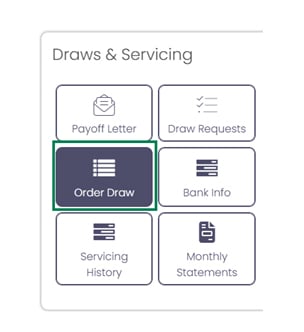
- From the loan’s main screen, locate the “Draws & Servicing” section on the right-hand side.
- Click “Order Draw.”
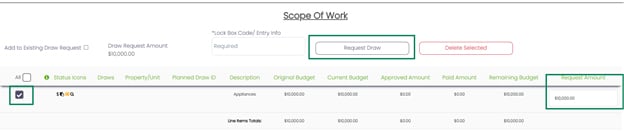
- The portal will display the approved scope of work and rehabilitation budget for the project.
- Select the checkbox on the left-hand side of each line item for which reimbursement is being requested.
- Enter the requested reimbursement amount for each selected line item on the right-hand side of the table.
- After selecting all applicable line items and entering the requested amounts, click the “Request Draw” button at the top of the table.
- A secondary screen will appear where additional documentation may be uploaded. Supporting documentation is only necessary when invoices, permits, receipts, or other documents will not be included or verified through the inspection.
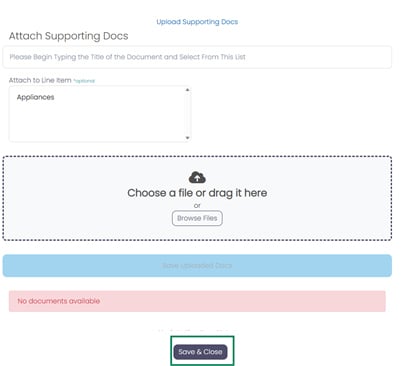
- Review the request and formally submit it through the portal.
The total draw request should only include work completed or materials specifically eligible for reimbursement under Unitas guidelines.
2. Inspection Coordination
After the draw request is submitted, Unitas will place an inspection order with an approved third-party inspection service.
The inspector will contact the appropriate project representative to schedule the inspection. Borrowers should ensure that their current contact information, including their full name, phone number, and email address, is available in the portal or provided to the Unitas Draw Team when requested.
The borrower must provide the inspector with access to the property and any reasonably necessary information to complete the inspection.
3. Draw Review
A member of the Unitas Draw Team will review the submitted request and confirm that the requested amounts and line items are consistent with the original rehabilitation budget approved during the loan diligence and closing process.
The Draw Team will use the completed third-party inspection report, the approved scope of work, and any supporting documentation to confirm that the work for which reimbursement is requested has been completed.
a. The level of completion for each requested line item will be evaluated to determine the amount approved for reimbursement.
b. The Draw Team will confirm that sufficient rehabilitation funds remain available to complete the project before releasing additional funds.
c. The borrower must be current on all required loan payments and otherwise compliant with the loan documents before additional draw funds may be released.
d. If the loan is past its maturity date, the maturity date must be formally extended before additional draw funds may be released.
e. Any proposed reallocation of funds between approved budget line items must receive prior written approval from Unitas.
4. Draw Approval or Revision
Once the draw review is complete, the Unitas Draw Team will notify the borrower and, when applicable, the broker of the determination.
If the draw is approved, the notification will identify the amount approved for reimbursement.
If the full amount requested is not approved, the Draw Team will provide an explanation identifying:
- The line items or amounts that were not approved;
- Any work that must be completed;
- Any additional photographs, invoices, permits, lien waivers, or other documentation that must be provided; or any corrections required before the request can be reconsidered.
Approval amounts may differ from the amounts requested based on the inspection results, the percentage of work completed, available budget funds, or the requirements of the loan documents.
5. Funding and Wire Release
After the draw is approved, the Unitas Draw Team will prepare and submit the draw memo identifying the approved reimbursement amount and the applicable wire instructions.
Borrowers can also navigate to Bank Info in their portal under Draws & Servicing to input wire instructions
a. For a new payee or newly provided bank account, Unitas will verbally confirm the wire instructions with the borrower or borrowing entity receiving the funds.
b. Draw funds will be wired directly to the borrower or borrowing entity unless otherwise approved by Unitas.
c. The Unitas Draw Team will notify the borrower and, when applicable, the broker when the wire has been submitted for release.
Borrowers should promptly notify Unitas of any changes to their banking information. Updated wire instructions may be subject to additional verification procedures before funds are released.
6. Viewing Current and Prior Draw Requests
Borrowers may review their draw history through the Unitas Borrower Portal.
To view current or prior requests:
- Return to the loan’s main screen.
- Locate the “Draws & Servicing” section.
- Click “Draw Requests.”
The portal will display the project’s scope of work, including the amounts approved and disbursed for each line item that has been included in a draw request.
Frequently Asked Questions
What is the average turnaround time for a draw request?
- The average turnaround time is approximately 24–48 hours after the Unitas Draw Team receives the completed third-party inspection report and all required supporting documentation.
- The turnaround period does not begin when the initial request is submitted if the inspection or required documentation remains outstanding.
- If a completed request has not been processed within 48 hours after receipt of the inspection report and all required information, the borrower or broker should contact the Unitas Draw Team for a status update.
Do materials need to be installed before reimbursement is requested?
- Generally, yes. Draw funding is intended to reimburse completed work.
- In certain circumstances, Unitas may approve reimbursement for materials that have been purchased and delivered to the project site but have not yet been installed. Approval may depend on the inspection report, photographs, invoices, proof of payment, secure storage, and the type of materials involved.
How many draws may a borrower request?
- There is no fixed limit on the number of draw requests, provided that the frequency and amount of the requests are reasonable for the size and progress of the project.
- A typical rehabilitation project is completed through approximately three to five draws.
What happens if Unitas does not approve the full draw request?
- A member of the Unitas Draw Team will explain which line items or amounts were not approved and the reason for the decision.
- Unitas may require additional photographs, invoices, permits, lien waivers, inspection details, or completion of additional work before the remaining amount can be considered for reimbursement.
What types of inspections are acceptable?
- Unitas requires an inspection completed by an approved third-party inspection service.
- At a minimum, the inspection package must include:
- Photographs of the completed work;
- The applicable scope of work or rehabilitation budget; and
- A completed inspection report identifying the percentage or amount of work completed.
- At a minimum, the inspection package must include:
- Unitas will order the inspection after the borrower submits the draw request through the portal.
Can a borrower receive a draw while delinquent?
- No. A borrower must be current on all required loan payments before additional draw funds may be released.
- If the loan is past its maturity date, the borrower must complete an approved maturity extension before additional draw funds may be released.
Can a borrower reallocate funds from the approved rehabilitation budget without Unitas approval?
- No. Any proposed reallocation of funds between approved budget line items must be submitted to Unitas for review and approval before the borrower requests reimbursement under the revised allocation.
- Submitting a draw request through the portal does not constitute approval of a budget reallocation.